
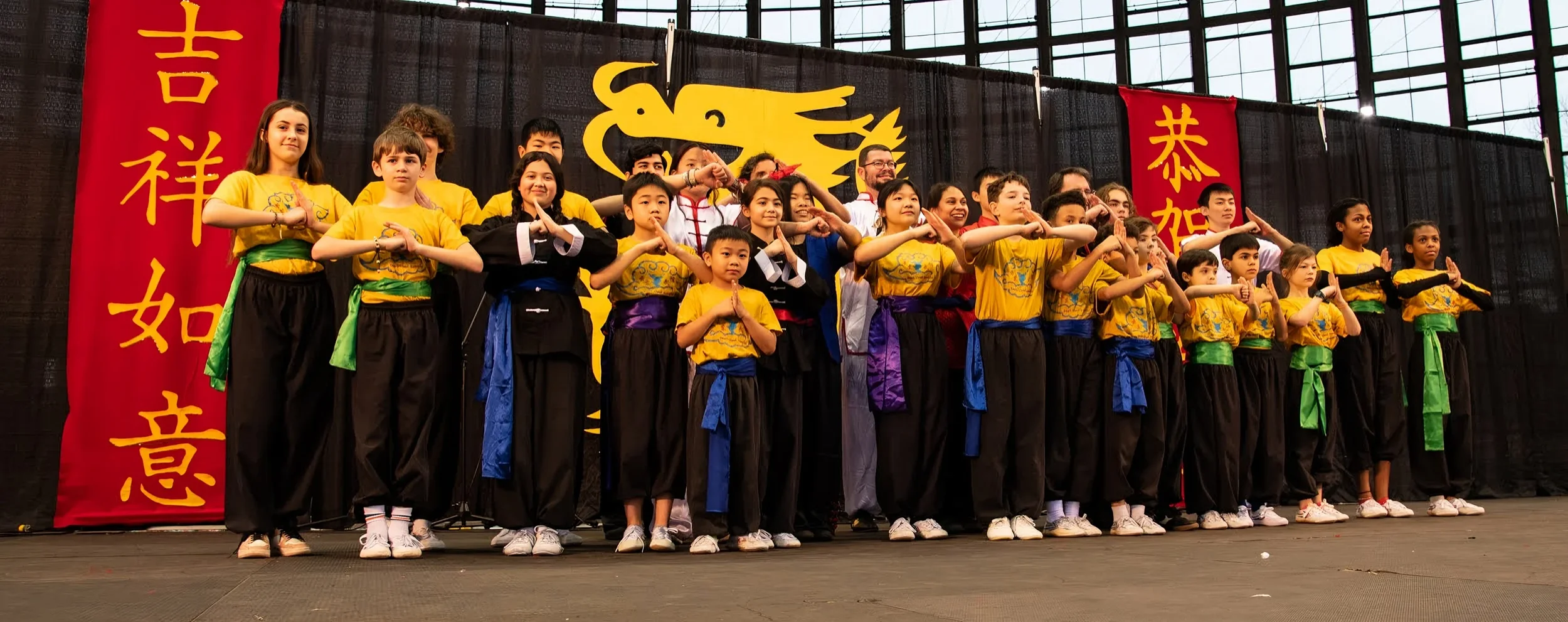
Wushu 武术
Taught by : Mike Zhu, Ginny Lam, Oliver Chung, Alexander Justel Betancourt
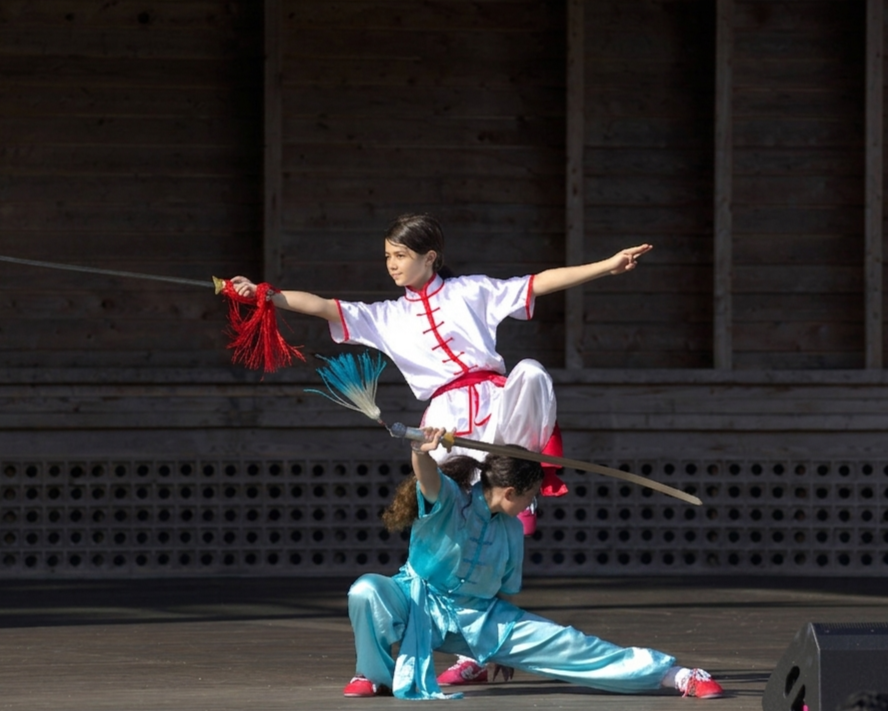
Wushu introduces students to the foundational techniques, movement principles, and training methods of Chinese martial arts. Classes focus on developing balance, coordination, flexibility, strength, and proper body mechanics through stance work, basic techniques, forms, and conditioning. Students will learn hand forms and the 4 standard wushu weapons (broadsword, staff, straight sword, and spear). As students progress, they will be offered the opportunity to train in other non standard weaponry.
The course is suitable for beginners as well as experienced martial artists looking to strengthen their fundamentals and expand their understanding of Chinese martial arts. Students can expect a structured, progressive training environment that encourages discipline, health, and long-term skill development.
Once students complete the beginner’s program, they will have the option to specialize in modern wushu, traditional wushu, or both.
Benefits:
Builds confidence, discipline, focus, and resilience.
Develops coordination, balance, flexibility, power, and mental strength
Encourages perseverance and provides a creative outlet for energy.
FAQ:
What ages can join?
The wushu program is designed for anyone ages 6 and upDo I need prior experience?
No experience is necessary.What will I learn?
Students will learn foundational and advance techniques, forms, conditioning, flexibility, and coordination through modern training methods.Is the environment supportive?
Yes. We strive to create a welcoming and encouraging environment where students can grow at their own pace.
Taiji 太极
Taught by : Imari Colón, Dr. Keely Dulmage

Tai Chi is an internal Chinese martial art that focuses on harnessing and utilizing internal energy through slow, gentle movements that simulate self-defense techniques, promoting stress reduction, improved balance, circulation, respiration, intellectual capacity, strength, and mobility, with progression from basic techniques to more complex taolu and advanced routines involving demonstration weapons and some contact.
This class introduces the foundational principles and movement practices of Taiji, with an emphasis on Chen Style Taiji. Each session begins with gentle warm-up and stretching before moving into silk-reeling exercises to develop coordination, connected movement, body awareness, and the foundational mechanics of Chen Taiji.
Training may include basic Chen Taiji movement patterns, standing work, and introductory form practice as students develop a deeper understanding of the art. Classes emphasize relaxed, intentional movement and building a strong foundation for continued Taiji practice.
Benefits:
Improves balance, coordination, and mobility
Supports stress relief and nervous system regulation
Develops breath awareness and mindfulness
Builds internal strength, posture, and body connection
Encourages longevity, recovery, and overall wellness
Helps cultivate calm focus and emotional balance
FAQ:
Do I need to be flexible or experienced?
No. Classes are beginner-friendly and adaptable to different bodies and experience levels.Is Taiji only for relaxation?
No. While deeply calming, Taiji is also a martial art that develops structure, coordination, and internal power.What should I wear?
Comfortable clothing you can move in comfortably.What is the difference between Taiji and Qigong?
Qigong focuses more on breath, energy cultivation, and simple exercises, while Taiji combines those principles into flowing martial movement sequences.
Wing Chun 咏春
Taught by : Shifu Alex Wall
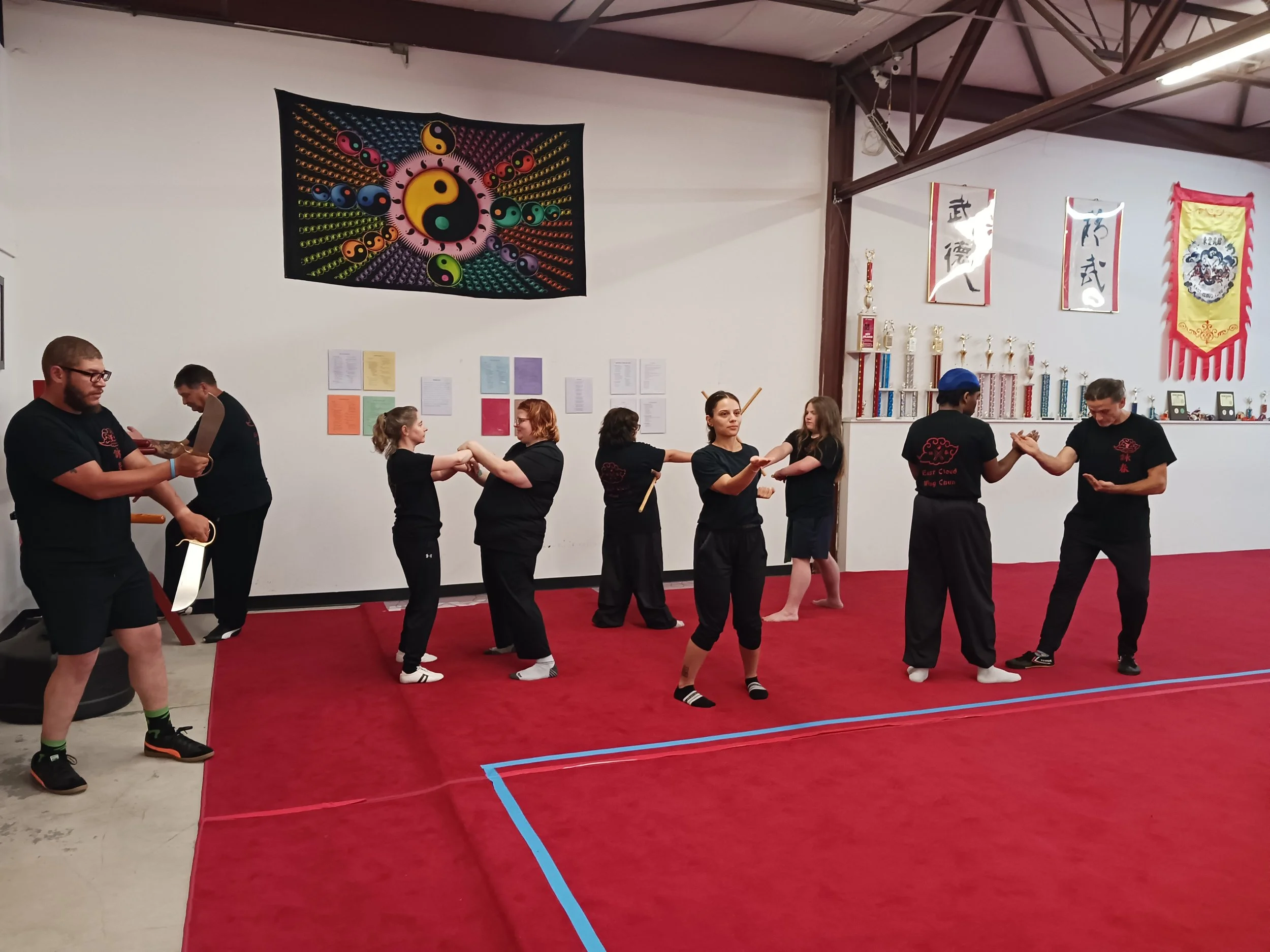
Wing Chun Kung Fu is a style of Southern Shaolin Kung Fu based on simplicity, efficiency, and effectiveness. Wing Chun uses 70% hand movements with low kicks and balanced footwork. It uses centerline theory, simultaneous attack and defense, as well as sensitivity to overcome an opponent's physical advantages. Our Wing Chun program is focused on partner drills which develop techniques into natural reactions for self-defense. Students progress through a leveled curriculum learning new and more complex movements at each stage and drills to apply them. Students also spar and do sticky hands (chi sau) to apply their techniques in a uncorrographed setting. Wing Chun contains 3 hand forms, a wooden dummy form, long pole, and butterfly swords. We also integrate stick fighting with our Wing Chun.
Benefits:
Improves balance, mobility, posture, and body awareness
Reduces stress while supporting mindfulness and breath awareness
Promotes strength, recovery, longevity, and emotional well-being
FAQ:
Is it beginner-friendly? Yes; the system is structured for progressive, efficient learning.
Is it strength-based? No. It prioritizes positioning and structure over force.
Do you spar? Yes, training incorporates drills, partner work, and controlled/light sparring based on experience level.
Jeet Kune Do 截拳道
Taught by : Gerald Townsend

Bruce Lee, seeking the fundamental concepts of all martial arts, combined elements of Western boxing, fencing, and Wing Chun to create his own martial art, Jeet Kune Do (JKD), meaning “The Way of the Intercepting Fist,” with the core principle being to intercept an opponent’s attack.
FAQ:
Is JKD one specific style?
No. JKD is an evolving approach that draws from multiple systems, emphasizing efficiency and directness.Will I only learn striking?
Classes may include footwork, trapping, timing drills, striking, and broader self-defense concepts.Do I need prior martial arts experience?
No. Beginners are welcome.
Kickboxing 截拳道
Taught by : Derek Stevens, Heba Salem

Chinese Kickboxing, or Sanda (散打), is a modern combat sport that blends traditional Kung Fu with full-contact striking, takedowns, and throws. Also called 自由搏击 (Zìyóu Bójī), meaning “free fighting,” it emphasizes speed, power, and strategy, making it an effective
Benefits:
Provides a full-body conditioning workout that improves stamina and coordination.
Enhances agility, reaction time, and technical striking skills.
Builds confidence, discipline, and resilience while relieving stress
FAQ:
Is this beginner-friendly?
Yes. Beginners and experienced students can train together with modifications as needed.Do I have to spar?
No. Light-contact sparring may be offered, but participation is optional.What kind of kickboxing is taught?
The program focuses on striking-based kickboxingWhat should I bring?
Athletic clothing and water. Gloves and equipment recommendations can be provided.
Open Hand Circle
Taught by : Shifu Alex Wall

Open Hand Circle gets its name from our resident Zen Priest, Alex, who co-facilitates this morning community gathering with Maestra Imari. Held in our meditation room space, we gather to sit quietly, share tea and explore oracle readings for insight, mindfulness, and meaningful discussion. Journaling and group reflection are encouraged as we feel moved.
This session is free and open to everyone—come sip, reflect, and connect! A great way to slow down and prepare the mind before our Taiji class.
Benefits:
Creates space for reflection, mindfulness, and connection
Encourages meaningful conversation and self-awareness
Supports emotional balance and personal growth
Cultivates community and shared learning
Offers time to slow down and reconnect inwardly
Integrates tea, meditation, journaling, and contemplative practices
FAQ:
What is Open Hand Circle?
Open Hand Circle is a community gathering centered around mindfulness, tea, reflection, discussion, and personal exploration.Do I need meditation experience?
No. All experience levels are welcome.What happens during a session?
Sessions may include meditation, tea sharing, oracle readings, journaling, group discussion, or contemplative practices.Is this religious?
No. The space is open and welcoming to people from many different backgrounds and perspectives.